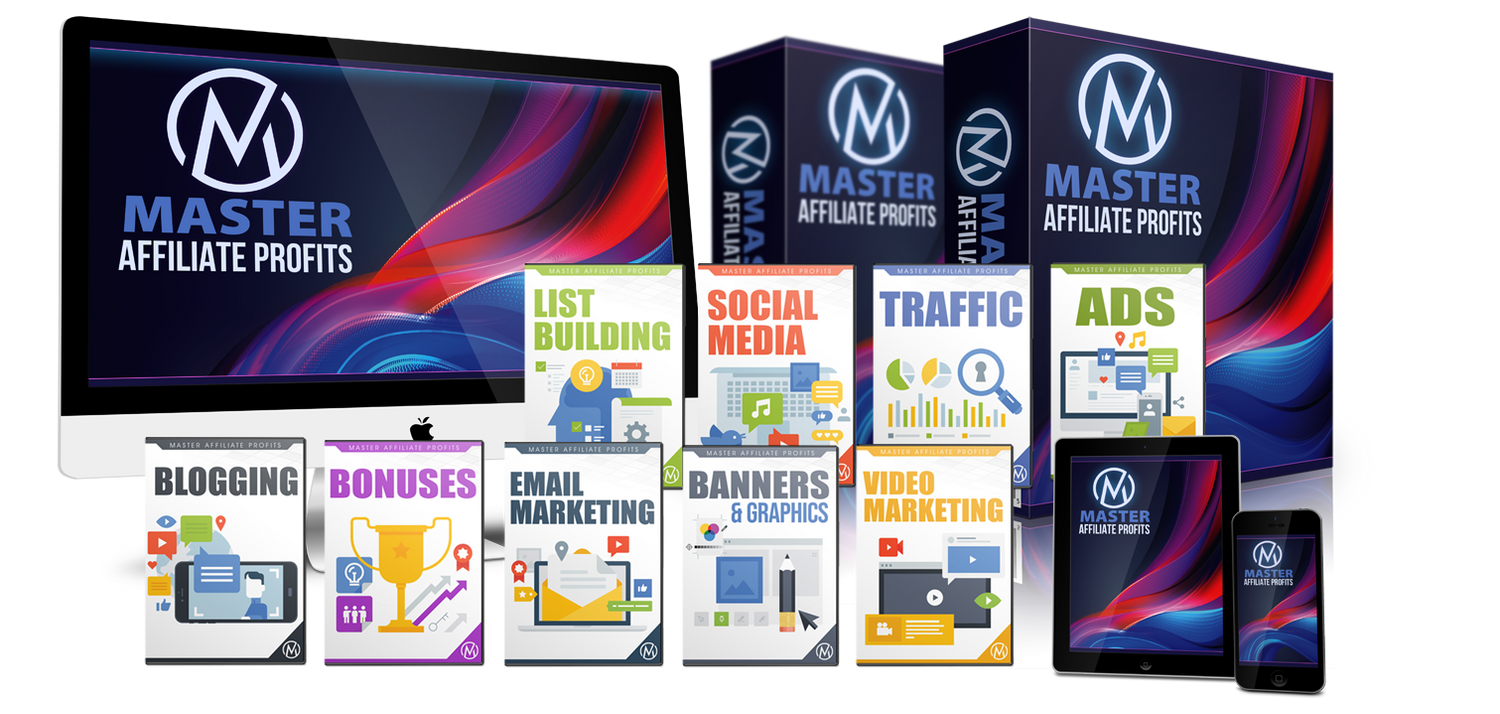
In an unprecedented move that’s set to redefine the landscape of affiliate marketing, Master Affiliate Profits (MAP), a comprehensive affiliate marketing eco-system, officially opened its doors to the public, March 26, 2024. Developed by affiliate marketing powerhouses John Thornhill, Omar Martin, and Melinda Martin, MAP has concluded its meticulous three-phase launch, transitioning from an exclusive backer program to a global platform accessible to all aspiring and established marketers.
Phase One: Initially opened exclusively for backers, this phase allowed early investors to secure their position in the ecosystem, gaining lifetime access to MAP’s Platinum level benefits.
Phase Two: Focused on empowering backers to promote the MAP backer program and lifetime deal, this phase facilitated the expansion of the community and prepared the ground for the wider public launch.
Phase Three: Marking today’s global unveiling, MAP introduces a tiered membership structure, inviting new users to join free and explore the option to upgrade to Silver, Gold, or Platinum levels. This phase democratizes access to the MAP ecosystem, offering unparalleled resources for affiliate marketing success.
Revolutionizing Affiliate Marketing
Distinct from conventional platforms, MAP champions the affiliate marketer’s success above all. With a staunch policy against lead theft, MAP ensures that marketers retain full control over their leads. The platform not only aids in list building but also enables seamless integration with leading autoresponders, allowing for direct lead download and insertion, thus preventing list sabotage and ensuring that MAP never competes with its users.
A Comprehensive Eco-System
MAP is more than a training platform; it’s an all-encompassing ecosystem designed to nurture the affiliate marketer’s journey from novice to expert. The system is built on the foundation of providing perpetual commissions across all levels of product and membership, ensuring that users are rewarded for their efforts, forever.
Training Modules:
List Building: Crafting a robust email list. Email Marketing: Mastering effective communication and conversion strategies. Traffic Generation: Driving quality traffic through various channels. Video Marketing: Leveraging video content for engagement and sales. Creating Bonuses: Enhancing offers with value-added bonuses. Social Media Mastery: Building presence and influence on social platforms. Ads Marketing: Navigating the world of online advertising for maximum impact. Banners & Graphics: Designing compelling visual content. Blogging: Establishing authority and driving traffic through content. A Promise of Integrity and Growth
In a realm often mired in competition and secrecy, MAP stands out as a beacon of integrity and collaboration. By providing direct access to strategies from affiliate millionaires themselves, John Thornhill, Omar Martin, and Melinda Martin, MAP is poised to elevate the affiliate marketing industry to new heights.
As MAP opens its doors to the world, the invitation is clear: join an ecosystem where your growth is the priority, your leads are your own, and your potential for success is limitless.
About Master Affiliate Profits
Master Affiliate Profits (MAP) is an innovative affiliate marketing ecosystem designed to provide comprehensive training, tools, and support to marketers at all levels. Founded by industry veterans John Thornhill, Omar Martin, and Melinda Martin, MAP is dedicated to empowering marketers to achieve unparalleled success in the digital marketplace.
Then once you are a member message me at darren@darrennoble.co.uk and I will help you get off to a flying start by adding your link to my rotator that receives hundreds of hits daily, Stop trying to go it alone and Join The Winning Team.
We’ve all said it…“I should’ve bought Tesla stock when it was $17…” “I should’ve jumped on Apple before the first iPhone dropped…” “I should’ve grabbed Bitcoin when it was $200…
” Regret stings. Not because we didn’t know… But because we hesitated. And now? Those moments are gone. But here’s one that’s still in front of you.
It’s called MAP—and it’s already paid out over $613,510.99 in commissions to everyday people. Not tech bros. Not Wall Street. Not influencers with giant followings.
We’re talking about people who had never made a dime online before.
Like 1,173 others who already claimed their spot as MAP Platinum Backers.
They paid once—and they’re in for life.
Now, we’re about to open the doors to Phase 3 on Tuesday at 12 PM Eastern. When that happens? The lifetime pricing is GONE.
MAP moves to a recurring subscription model.
And the people who jumped in during Phase 2 will be very glad they did. Will this be another one of those things you wish you acted on sooner? Or will you look back a year from now and say…“That’s the day everything changed?
”You’ve got less than 24 hours to make that choice“
The digital landscape is in constant flux, and affiliate marketing is no exception. As we are well into 2025, it’s crucial for aspiring and seasoned marketers alike to understand the emerging trends and adapt their strategies accordingly. This post delves into the future of affiliate marketing, offering insights and predictions that will shape your business plan for the years to come.
The Evolving Landscape of Affiliate Marketing
The days of simply placing affiliate links and hoping for conversions are long gone. As 2025 moves on, successful affiliate marketing will hinge on:
AI-Powered Personalization:
Artificial intelligence will play a pivotal role in delivering personalized experiences to users. Expect to see more AI-driven tools that analyze user behavior and recommend relevant products.
SEO Tip: Focus on creating content that caters to specific user intents.
Emphasis on Data Privacy:
With increasing concerns about data privacy, compliance with regulations like GDPR and CCPA will be paramount. Marketers will need to prioritize transparency and build trust with their audience.
SEO Tip: Create content around data privacy in affiliate marketing, and use long tail keywords.
Video and Interactive Content:
Video content continues to dominate online consumption. Expect to see more interactive elements, such as quizzes and polls, integrated into affiliate marketing campaigns.
SEO Tip: Use video transcripts within your blog posts to help with SEO.
The Rise of Niche Communities:
Generalist approaches will give way to highly targeted niche communities. Building relationships within these communities will be crucial for driving conversions.
SEO Tip: target long tail keywords related to specific niche communities.
Key Trends to Watch in 2025
Voice Search Optimization:
With the increasing popularity of voice assistants, optimizing content for voice search will be essential. Focus on conversational keywords and natural language.
Sustainability and Ethical Marketing:
Consumers are increasingly conscious of their impact on the environment. Affiliate marketers who promote sustainable and ethical products will gain a competitive edge.
The Metaverse and Virtual Commerce:
The metaverse is poised to revolutionize online commerce. Explore opportunities to integrate affiliate marketing into virtual experiences.
Building Your 2025 Affiliate Marketing Business Plan
To thrive in this evolving landscape, you need a strategic plan. This is why I created “The Strategic Affiliate Course”. This course will give you:
In depth knowledge of current and future trends.
Step by step guides to building a profitable affiliate business.
Tools and techniques to use AI to your advantage.
Guidance on how to stay compliant with data privacy regulations.
How to find and profit from niche communities.
Why “The Strategic Affiliate Course” is Essential for 2025:
Future-Proof Strategies: Learn how to adapt to the changing landscape and stay ahead of the competition.
Practical Implementation: Gain actionable insights and step-by-step guidance to implement proven strategies.
Community Support: Connect with like-minded individuals and build valuable relationships.
Don’t let the future of affiliate marketing pass you by. Invest in your success and join “The Strategic Affiliate Course” today. Click here to learn more and secure your spot.
The future of affiliate marketing is bright, but it requires a proactive and strategic approach. By staying informed about emerging trends and investing in your education, you can build a thriving business in 2025 and beyond.
For further insights into the Affiliate Marketing world in 2025 have a read of some earlier posts below:
Are you ready to find the hidden treasure of affiliate marketing in 2025? The right keyword research can make your digital strategy amazing.
Keyword research for affiliate marketing is more than just finding popular words. It’s about finding profitable niches that match new market trends. The digital world is changing fast. Smart marketers use keyword research to find big opportunities.
In the UK, affiliate niche research has gotten better. Good digital business owners use new ways to find great markets early. This helps them get lots of traffic and make a lot of money.
Key Takeaways
Master the art of identifying emerging profitable niches
Understand the importance of precise keyword targeting
Learn advanced research techniques for affiliate marketing
Discover how to analyse market trends effectively
Develop a strategic approach to digital marketing opportunities
Understanding the Foundation of Affiliate Marketing Success
Affiliate marketing is changing fast. It needs a smart plan to find the best areas to work in 2025. The online world is growing, giving great chances for clever marketers.
Good affiliate marketing starts with knowing the market well. It’s about understanding what people want. By learning about keywords, you can find ways to make money.
Global affiliate marketing spending is set to hit $15.7 billion by 2024
Knowing what people want is vital for picking the right niches
Good research finds new chances in the market
Core Components of Effective Keyword Research
Finding the right keywords is essential. Here are some tips:
Use advanced tools for keyword research
Look at how often people search and how competitive it is
Check out long-tail keywords for better chances
Understanding Search Intent and User Behaviour
To do well in affiliate marketing, you need to understand what people search for. Top affiliates focus on:
Creating content that meets specific needs
Keeping up with keyword trends with tools like Google Trends
Changing strategies as the market changes
The art of affiliate marketing is knowing why people search, not just what they search for.
By getting these basics right, you’re ready to make the most of new chances online. You’ll find the best niches for 2025.
Essential Tools for Affiliate Keyword Research
Exploring affiliate marketing trends in 2025 needs strong tools. These tools help find profitable areas and keep you ahead. They are key for a successful digital strategy.
Let’s look at the best tools for finding keywords:
Google Trends: A free tool that shows what people search for in real-time
SEMRush: A detailed platform for keyword research and SEO checks
Ahrefs: Focuses on backlinks and finding keywords
Ubersuggest: Offers keyword ideas with data on search volume and difficulty
When picking tools, look for these important features:
Tracking search volume
Checking competition
Finding trends
Seeing if people are ready to buy
Experts say to use premium tools for better insights. Free tools give basic info, but paid ones like SEMRush and Ahrefs offer more. They help make smart choices in affiliate marketing.
Pro tip: Use several tools together to check your keyword data and make sure your research is right.
Learning to use these tools well will help you spot new chances. It will also help you improve your affiliate marketing plan for 2025.
Exploring High-Converting Affiliate Niches for 2025
Looking into affiliate marketing needs smart planning. By 2025, some areas will be great for making money. These include using smart keywords and checking what others do.
The world is changing fast, making new chances for affiliate marketers. We’ll look at the top areas that could make a lot of money.
Software and SaaS Marketing Opportunities
The market for digital solutions is growing fast. There are new chances like:
Cloud-based tools for work
Software to keep data safe
Tools for working together from far away
Systems that use AI for business insights
Using smart keywords can help you find the right people to sell to. This makes it easier to make sales.
Health and Wellness Industry Growth
The health and wellness market is set to grow big. It’s expected to hit £4.8 trillion by 2025. Key areas to focus on are:
Custom diets
Apps for mental health
Technology for staying fit
Platforms for overall wellness
Knowing what others do can help you find new areas to explore in this big market.
Financial Services and Investment Trends
Online money management is changing fast. Good chances for affiliate marketing include:
Learning about cryptocurrencies
Apps for investing
Software for planning finances
Platforms for small investments
By using smart keywords and understanding the market well, you can do great in these areas. This could lead to big success in 2025.
Keyword Research for Affiliate Marketing: Finding Profitable Niches in 2025
Exploring affiliate marketing needs smart keyword research. This helps find good niches for 2025. Using special keyword techniques can spot great chances early.
The world of digital marketing is full of chances for clever affiliate marketers. With spending on affiliate marketing hitting £8.2 billion by 2022, knowing how to research keywords is key.
Identify emerging market trends
Analyse search intent deeply
Utilise advanced keyword research tools
Focus on high-converting niches
Some top niches for keyword research in 2025 are:
Health and Wellness: Projected market value of £7 trillion
Gaming Industry: Expected revenue of £435 billion by 2028
Pet Care: £123.6 billion market with strong affiliate chances
Good keyword research for affiliate marketing means knowing what users want. Look at search volumes and guess what’s coming next. With semantic keyword optimisation, you can make plans that meet what people need.
Smart keyword research turns chances into profits.
Pro tip: Pick keywords with clear buying intent, like “best,” “buy,” and “affordable.” This boosts chances of making sales in your chosen niche.
Advanced Keyword Analysis Techniques for Affiliates
Affiliate marketing needs smart keyword research. It’s not just about finding words. It’s about finding the right words that make people buy.
Good affiliates know keyword analysis is more than finding popular words. They look at how people search and find new chances.
Competitive Analysis Methods
Looking at competitors’ keywords is key. Here’s how to do it:
Find the best competitors in your area
Use tools to check their keywords
Find what they miss
Make your own special plan
Long-tail Keyword Strategies
Long-tail keywords are great for finding specific groups. They can lead to more sales than general terms.
Keyword Type
Search Volume
Competition Level
Conversion Rate
Short-tail Keywords
High
Very High
Low
Long-tail Keywords
Low to Medium
Low
High
Search Volume and Difficulty Assessment
Smart affiliates pick keywords wisely. They look for terms with:
At least 100 searches
Difficulty score of 0-80
Good chance of sales
“The key to successful affiliate marketing is not just finding keywords, but understanding the intent behind them.” – Digital Marketing Expert
Tools like SEMrush and Ahrefs help a lot. They show billions of keywords worldwide. Use them to improve your keyword plan and get better results.
Leveraging Search Trends and Seasonal Opportunities
Affiliate marketing is always changing. It’s key to know the trends and seasonal chances. Good marketers see that what’s popular changes with the seasons and what people want.
Seasonal trends offer big chances for affiliate marketers to make more money:
Spring: Focus on outdoor fitness gear and sustainable living products
Summer: Capitalise on travel accessories and health & wellness niches
Autumn: Target educational technology and home improvement products
Winter: Explore indoor entertainment and personal development offerings
Knowing the market trends helps marketers make content that meets people’s needs all year.
Seasonal Niche
Market Value
Commission Range
Home Improvement
£1.12 trillion
8-15%
Travel Accessories
£1.8 trillion
10-25%
Tech Gadgets
£1.5 trillion
5-15%
To do well in affiliate marketing in 2025, marketers need a flexible plan. They should be ready to change their content to fit new trends. This way, they keep people interested and make money all year.
Content Optimisation Strategies for Affiliate Success
Affiliate marketing keeps changing. Experts say it’s key to make good content. You need to use the right keywords well.
Good content is the heart of digital marketing. It can make people want to buy from you.
Creating Converting Content
To make great content, follow these tips:
Focus on solving real problems for users
Put affiliate links in useful content
Use storytelling techniques to grab your audience
Give clear tips and advice
SEO Best Practices for Affiliate Content
Using smart keywords can help your content be seen more. Here’s what to do:
Find keywords that are not too hard to rank for
Make your meta descriptions and title tags great
Write detailed, helpful content
Make sure your site works well on phones
Content Distribution Channels
Sharing your content in different places can help more people see it. Use:
Social media sites
Emails to your subscribers
Special forums and groups
Guest posts on other sites
The secret to doing well in affiliate marketing is to offer real value and promote the right products.
By using these tips, you can make content that people love. This can help you make money in a good way.
Measuring and Tracking Keyword Performance
Getting good at keyword analysis for affiliates means you need to track and measure well. Digital marketers know that to do well in affiliate marketing, you must watch your keywords closely. You need to make choices based on the data you get.
Important things to track include:
Search rankings
Click-through rates (CTR)
Conversion rates
Organic traffic volume
Looking at what your competitors do is very important. Tools like Google Analytics and Google Search Console give you great info about how your site does in search.
“Tracking keywords is not just about numbers, but understanding user intent and market dynamics.” – Digital Marketing Expert
Tools for keyword research help a lot. Long Tail Pro, for example, can check up to 2,000 keywords at once. It also quickly tells you how competitive each keyword is. This helps you find keywords that are easy to rank for but have a lot of chance to do well.
Good keyword tracking means:
Doing regular keyword checks
Watching how search volume changes
Looking at how users interact with your site
Changing your content based on what you learn
Long-tail keywords are a big part of search, making up 70% of searches worldwide. They also lead to more sales, 2.5 times more than short-tail keywords. With good tracking, affiliate marketers can keep getting better and reach their full online marketing goals.
Avoiding Common Affiliate Keyword Research Mistakes
Affiliate marketing is complex. It needs smart keyword research. Many marketers make mistakes that hurt their success.
Here are the main mistakes to avoid in keyword research:
Overlooking buyer intent keywords that signal purchase readiness
Focusing solely on high-volume keywords without assessing competition
Neglecting long-tail keyword opportunities
Ignoring search intent and user behaviour
It’s key to know about buyer intent keywords. These phrases show a user wants to buy. Not all keywords are created equal.
Keyword Type
Conversion Potential
Search Volume
Broad Keywords
Low
High
Long-tail Keywords
High
Low
Buyer Intent Keywords
Very High
Moderate
Good affiliate marketers use data to pick keywords. Research shows picking the right keywords can increase sales up to 10 times faster. Look for keywords with a difficulty score of 0-80 and a search volume of at least 100.
Spending time on new affiliate areas like AI, SaaS, and tech is smart. These areas have big commission rates and ongoing money.
Remember: Precision in keyword research trumps volume every time.
Conclusion
Exploring keyword research for affiliate marketing in 2025 is a big task. It needs smart thinking and being ready to change. The world of digital marketing keeps growing, full of chances for clever affiliate marketers.
Affiliate marketing trends in 2025 show the need to spread out across many areas. You can find success in tech, health, travel, and food. Using tools like Google Keyword Planner and SEMrush helps find good markets.
Sub-niches like eco-tourism, plant-based food, and smart homes are great for affiliate work. Using SEO, content, and social media helps make money. This way, you can keep up with what people want and new tech.
To do well in affiliate marketing, you must keep learning and analysing keywords. Being open to new ways to market is key. The best marketers are those who stay quick, use data, and give real value to their audience.
Ready to take your affiliate marketing journey to the next level? 🚀 Join “The Strategic Affiliate Course” and unlock the secrets to building a thriving online business! We’ll guide you step-by-step with proven strategies, personalized support, and a community of like-minded entrepreneurs. Learn from experienced affiliate marketers who are still actively crushing it in the industry! ➡️ Enroll now and fast-track your success: The Strategic Affiliate Course
What are the most profitable affiliate marketing niches for 2025?
The top niches for 2025 are Software and SaaS, Health and Wellness, and Financial Services. Also, Digital Technology, Sustainable Living, and Personalised Fitness and Nutrition are promising. These areas have a lot of growth and offer great chances for making money.
How important is keyword research in affiliate marketing?
Keyword research is very important. It helps you know what people are searching for. It also shows you the best niches and how to make content that people want. Good keyword research makes your marketing better by reaching the right people at the right time.
What tools are best for affiliate marketing keyword research?
The best tools are Google Keyword Planner, SEMrush, Ahrefs, Ubersuggest, and Google Trends. They give you lots of info on search volumes and competition. Each tool has special features to help find good niches and improve your strategy.
How do I identify buyer intent keywords?
Look for keywords like “best”, “review”, and “buy”. These show people are ready to buy. Use tools to check search volumes and competition. This helps find keywords that lead to sales.
What are long-tail keywords, and why are they important?
Long-tail keywords are specific phrases with lower search volumes but higher conversion rates. They target specific needs and have less competition. For example, “best affordable fitness tracker for runners” is more specific than “fitness tracker”.
How often should I update my keyword strategy?
Update your strategy every three months. Keep up with trends and changes in search behaviour. Regular checks help you stay on top of the market and find new opportunities.
What is semantic keyword optimisation?
It’s about understanding search intent, not just keywords. It’s about making content that fully covers a topic. This makes your content more relevant and helps with rankings and engagement.
How can I balance evergreen and trend-driven content?
Mix evergreen content that always has value with trend-specific content. Aim for 70% evergreen and 30% trend-driven. Use Google Trends to find seasonal trends and plan your content.
The allure of earning passive income online through affiliate marketing is undeniable. However, the internet’s vast landscape also harbours numerous scams that prey on unsuspecting individuals. Protecting yourself from these pitfalls is crucial to building a legitimate and sustainable online business. In this guide, we’ll delve into the five major red flags that should raise your suspicion and help you navigate the world of affiliate marketing safely.
Why Scams Thrive in Affiliate Marketing
The appeal of quick riches and effortless income makes affiliate marketing a prime target for scammers. These individuals exploit the desire for financial freedom, often promising unrealistic returns with minimal effort. Recognizing these deceptive tactics is the first step in safeguarding your time and resources.
Red Flag 1: Unrealistic Income Claims and Guarantees
The Deceptive Promise: Scammers often lure victims with promises of guaranteed income, overnight riches, or unrealistic earnings within a short timeframe. Phrases like “Make £10,000 in your first week!” or “Guaranteed passive income!” should immediately raise red flags.
The Reality: Legitimate affiliate marketing requires consistent effort, time, and strategic planning. While high earnings are possible, they are the result of hard work, not instant luck.
How to Identify: Be wary of any program that guarantees specific earnings or promises unrealistic returns. Research typical income ranges within your chosen niche and understand that results vary.
Red Flag 2: Lack of Transparency and Vague Information
The Hidden Details: Scammers often conceal crucial information about their business model, product details, or company background. They may use generic terms or avoid providing concrete information.
The Reality: Reputable affiliate programs are transparent about their products, commission structures, and company history. They provide clear terms and conditions, contact information, and detailed product descriptions.
How to Identify: Look for programs that provide comprehensive information about their products, company, and affiliate terms. If you find vague or incomplete details, proceed with caution.
Red Flag 3: Pressure Tactics and Urgency
The Fear of Missing Out (FOMO): Scammers frequently use high-pressure tactics to create a sense of urgency. They may claim limited spots, expiring offers, or exclusive deals that disappear quickly.
The Reality: Legitimate affiliate programs provide ample time for you to research and make informed decisions. They don’t pressure you into joining or making immediate purchases.
How to Identify: Be cautious of programs that pressure you to act quickly or create a sense of urgency. Take your time to research and evaluate the opportunity before committing.
Red Flag 4: Upfront Fees and Excessive Costs
The Hidden Costs: Some scams require substantial upfront fees for training, tools, or access to their program. These fees may be disguised as “membership fees” or “setup costs.”
The Reality: While some affiliate programs may require minimal investments in tools or resources, legitimate programs typically don’t charge exorbitant upfront fees.
How to Identify: Be wary of programs that require significant upfront payments. Research the typical costs associated with affiliate marketing and compare them with the fees being charged.
Red Flag 5: Poor Quality Products and Services
The Worthless Offer: Scammers often promote low-quality or worthless products and services that provide little to no value to customers. They may focus on hype and marketing rather than product quality.
The Reality: Reputable affiliate programs promote high-quality products and services that meet customer needs and expectations. They prioritize customer satisfaction and product quality.
How to Identify: Research the products or services being promoted. Look for customer reviews, testimonials, and product demonstrations. If you find negative feedback or evidence of poor quality, avoid the program.
Protecting Yourself: Due Diligence is Key
Research: Before joining any affiliate program, conduct thorough research. Look for reviews, testimonials, and information about the company and its products.
Verify Claims: Don’t take income claims or guarantees at face value. Verify them by researching industry standards and typical earnings.
Read the Fine Print: Carefully review the terms and conditions of any affiliate program before joining. Pay attention to commission rates, payment terms, and any hidden fees.
Trust Your Instincts: If something feels too good to be true, it probably is. Trust your instincts and avoid programs that raise red flags.
Seek Community Input: Join online affiliate marketing communities and forums. Ask questions and seek advice from experienced affiliates.
Navigating the Landscape with Confidence
Affiliate marketing offers incredible potential, but it’s essential to approach it with caution and awareness. By recognizing these red flags and conducting thorough due diligence, you can protect yourself from scams and build a legitimate online business.
If you’re serious about mastering affiliate marketing and want to avoid the pitfalls that many beginners face, consider investing in structured guidance. “The Strategic Affiliate” programme provides a comprehensive roadmap, cutting-edge strategies, and a supportive community to help you succeed. Additionally, for those seeking personalized attention and tailored strategies, I offer one-on-one mentorship to guide you through every step of your affiliate marketing journey. Let’s navigate the affiliate marketing landscape together, ensuring your success is built on a foundation of integrity and proven strategies.
Affiliate marketing, online business model concept. Creating relationships strategy between merchants, affiliates, and customers. Generated revenue by rewarding affiliates for referring customers.
The world of online income is vast and often overwhelming, especially for newcomers. If you’ve been intrigued by the potential of affiliate marketing but don’t know where to start, you’re in the right place. this post “Affiliate marketing For beginners” will break down the process into manageable steps, providing a clear roadmap to your affiliate marketing journey.
At its core, affiliate marketing is a performance-based marketing strategy where you earn a commission by promoting other people’s or companies’ 1 products. Think of it as being a digital salesperson. You find a product you like, promote it, and when someone makes a purchase through your unique affiliate link, you get paid.
Why Choose Affiliate Marketing?
Low Barrier to Entry: You don’t need to create your own products or handle customer service.
Flexibility: You can work from anywhere with an internet connection.
Passive Income Potential: Once your campaigns are set up, they can generate income even while you sleep.
Scalability: You can scale your income by promoting more products and reaching a wider audience.
Step 1: Choosing a Niche
The first and most crucial step is selecting a niche. A niche is a specific segment of the market you’ll focus on. Choosing a niche you’re passionate about is essential, as it will make the process more enjoyable and sustainable.
Tips for Choosing a Niche:
Identify Your Interests: What are you passionate about? What topics do you enjoy learning and talking about?
Research Market Demand: Use tools like Google Trends and keyword research tools to see if there’s a demand for your niche.
Assess Competition: Analyze the competition in your niche. Is it saturated? Can you find a unique angle?
Consider Profitability: Are there affiliate programs and products related to your niche that offer good commissions?
Step 2: Finding Affiliate Programs
Once you’ve chosen your niche, it’s time to find affiliate programs. These programs provide you with affiliate links and marketing materials.
Where to Find Affiliate Programs:
Affiliate Networks: Platforms like Amazon Associates, ShareASale, CJ Affiliate, and ClickBank offer a wide range of affiliate programs.
Company Websites: Many companies have their own in-house affiliate programs. Check the footer of their websites for “Affiliates” or “Partners.”
Niche-Specific Platforms: Search for platforms that specialize in your chosen niche.
Things to Consider:
Commission Rates: How much will you earn per sale?
Cookie Duration: How long after someone clicks your link will you earn a commission?
Product Quality: Promote products you believe in and that provide value to your audience.
Payment Terms: How and when will you get paid?
Support and Resources: Does the program provide marketing materials and support?
Step 3: Building Your Online Presence
To effectively promote affiliate products, you need an online platform. This could be a website, blog, or social media presence.
Website/Blog:
Create a website or blog focused on your niche.
Publish high-quality content that provides value to your audience.
Optimize your website for search engines (SEO).
Social Media:
Choose social media platforms relevant to your niche.
Create engaging content and build a following.
Use social media to drive traffic to your website or affiliate links.
Email Marketing:
Build an email list to nurture leads and promote affiliate offers.
Provide valuable content and offers to your subscribers.
Step 4: Creating Valuable Content
Content is king in affiliate marketing. Create content that educates, informs, and entertains your audience.
Types of Content:
Product Reviews: Provide honest and detailed reviews of affiliate products.
How-To Guides: Teach your audience how to solve problems related to your niche.
Comparison Posts: Compare different products in your niche.
Blog Posts: Share your expertise and insights on relevant topics.
Video Content: Create reviews, tutorials, and informational videos.
Content Tips:
Focus on providing value to your audience.
Use high-quality images and videos.
Optimize your content for search engines.
Write naturally, and focus on helping your audience.
Step 5: Driving Traffic
Driving traffic to your content and affiliate links is essential for generating sales.
Traffic Generation Methods:
SEO: Optimize your website and content for search engines.
Social Media Marketing: Use social media to drive traffic to your website.
Paid Advertising: Run targeted ads on platforms like Google Ads and Facebook Ads.
Email Marketing: Send targeted emails to your subscribers.
Guest Blogging: Post content on other peoples websites.
Step 6: Tracking and Optimization
Tracking your results is crucial for understanding what’s working and what’s not.
Tracking Tools:
Google Analytics: Track website traffic and user behavior.
Affiliate Network Reports: Monitor your clicks, conversions, and earnings.
Link tracking software.
Optimization Tips:
Analyze your data and identify areas for improvement.
Test different marketing strategies and content formats.
Optimize your website and content for conversions.
Navigating the Learning Curve
As you embark on your affiliate marketing journey, remember that learning is an ongoing process. While this guide provides a solid foundation, some individuals find that a structured learning environment accelerates their progress. If you’re looking to delve deeper and gain access to advanced strategies, community support, and personalized guidance, consider exploring resources like the “Strategic Affiliate Course.” It’s designed to help you streamline your learning curve and implement proven techniques for success.
Conclusion
Affiliate marketing can be a lucrative way to earn income online. By following these steps, you can build a solid foundation for your affiliate marketing journey. Remember to be patient, persistent, and always focus on providing value to your audience. With the right strategies and a commitment to learning, you can achieve success in the world of affiliate marketing.
Keep up with our future posts on the exciting world that is Affiliate Marketing by subscribing below:
In the ever-evolving world of digital marketing, affiliate marketing has emerged as a cornerstone for generating online income. However, navigating this landscape can often feel like deciphering a complex puzzle with missing pieces.In the ever-evolving digital landscape, affiliate marketing stands out as a beacon for individuals looking to earn a living online. It’s an attractive proposition: promote products you believe in and earn commissions on sales without the hassles of inventory, shipping, or customer service. However, for newcomers, the path to affiliate marketing success is fraught with challenges and complexities. Understanding the current state of affiliate marketing and the hurdles newbies face is crucial for anyone looking to dive into this lucrative field.
Affiliate marketing’s appeal lies in its simplicity and potential for passive income. With internet usage soaring globally, the opportunities to reach and influence potential buyers have never been greater. The digital age has democratized marketing, allowing anyone with internet access to promote products and earn commissions. This has led to an explosion in affiliate marketing’s popularity, with businesses of all sizes leveraging affiliates to expand their reach.
Challenges for Newbies
Despite its allure, affiliate marketing is not a get-rich-quick scheme. Success requires strategy, persistence, and a willingness to learn. Newbies face several hurdles:
Overwhelming Information: The internet is flooded with information on affiliate marketing, much of it contradictory or outdated. Filtering through this to find reliable, actionable advice can be daunting.
Choosing the Right Products: Success begins with selecting products to promote that are both profitable and aligned with your audiences interests. However, the competitive landscape can make challenging and eben impossible for beginners to get approved for promoting the top sellers..
Building Trust: In an era of skepticism towards online advertising, earning the trust of your audience is paramount. New affiliates must work hard to build credibility and establish themselves as authorities in their niche.
Traffic Generation: Driving traffic to affiliate offers is a significant challenge. Mastering SEO techniques and other traffic generation strategies is essential but can be overwhelming for newcomers.
Platform and Program Selection: With myriad affiliate programs and platforms available, choosing the most suitable and lucrative options can be confusing.
Introducing the MAP Eco-System
Enter the Master Affiliate Profits (MAP) Eco-System, a revolutionary platform designed to transform the affiliate marketing journey from a daunting challenge into a navigable and profitable path.
Created by affiliate marketing veterans John Thornhill, Omar Martin, and Melinda Martin, MAP is the culmination of decades of combined experience in the digital marketing realm. Recognizing the pitfalls and barriers that many marketers face, these pioneers set out to craft a system that not only educates but also empowers affiliates to build sustainable income streams.
Map is a not just an affiliate marketing platform, it is a complete EcoSystem of training, tools and products where every member has one objective, one mission ONE LINK to promote. Users learn the most mo0der affiliate marketing tactics with the MAP training program and they profit with hefty commissions as they promote just ONE LINK. A link that builds their list and makes them sales for LIFE bbecause their referalls are hard coded to them. This means that whenever your subscriber buys ANYTHING… YOU get paid.
The MAP training is cutting edge but thats not the best part.
What sets MAP apart is not just its comprehensive training modules but its revolutionary approach to affiliate marketing:
Lead Preservation: MAP ensures that your leads remain yours. Unlike other platforms, it promotes list-building without lead hijacking, allowing users to download and directly insert leads into their autoresponders.
Lifetime Earnings: With MAP, affiliates earn on everything, forever. It’s an ecosystem designed to reward effort and loyalty with perpetual income.
Education from Experts: The platform’s training is delivered by successful affiliate marketers, offering insights and strategies cultivated from real-world success.
Diving into the MAP Training Modules
MAP’s curriculum is structured into nine detailed modules, each targeting a core aspect of affiliate marketing:
List Building: Learn to grow and nurture a list that’s eager to engage with your offers.
Email Marketing: Master the art of persuasive email content that converts readers into buyers.
Traffic Generation: Discover how to drive a consistent flow of traffic to your offers through proven strategies.
Video Marketing: Leverage the power of video to enhance brand presence and connect with your audience on a deeper level.
Creating Bonuses: Boost your offer attractiveness with compelling bonuses.
Social Media Mastery: Utilize social platforms to expand your reach and build meaningful relationships with your audience.
Ads Marketing: Navigate the complexities of advertising online to maximize your investment.
Banners & Graphics: Create visually appealing banners and graphics that grab attention.
Blogging: Establish authority and draw organic traffic through value-driven blog content.
Conclusion
Affiliate marketing remains one of the best ways to generate online income, but success depends on the right strategy and tools. The MAP Eco-System simplifies the process, equipping affiliates with the necessary training, resources, and long-term earning potential. Whether you’re looking to escape the 9-5, supplement your income, or build a sustainable online business, MAP provides a proven path to success.
Now is the perfect time to get started. Phase 3 of MAP launches at the end of March, bringing even more exciting opportunities for affiliates. If you’re serious about building your online income, don’t wait—click my Affiliate Link here to get started, and I’ll personally guide you every step of the way.
Affiliate marketing. It’s been a buzzword for years, promising passive income and online riches. But as we head towards 2025, whispers of its demise are growing louder. Is affiliate marketing dead? Has the golden age of earning commissions online come to an end? The short answer is a resounding NO. But the how of affiliate marketing has changed dramatically, and that’s what we’re going to explore in this post. And, I’ll show you how my course, “The Strategic Affiliate,” can equip you with the skills to not just survive, but thrive in this evolving landscape.
The Rumours of Death Are Greatly Exaggerated (But the Landscape Has Shifted)
Let’s be clear: people are still buying products online, and businesses are still relying on affiliate marketers to reach new customers. The fundamental principle of affiliate marketing – recommending products you love and earning a commission – remains solid. What has changed is the playing field.
Increased Competition: The barrier to entry for affiliate marketing is lower than ever. This means more competition, making it harder to stand out.
Algorithm Updates: Google’s algorithm updates prioritize high-quality content and user experience. Thin, spammy affiliate sites are being penalized.
Consumer Savvy: Consumers are more informed and discerning. They can spot a pushy, inauthentic recommendation a mile away. Trust is paramount.
Platform Changes: Social media platforms are constantly evolving their algorithms, impacting how affiliate marketers reach their audiences.
The old “spray and pray” approach is dead. Simply slapping affiliate links on a website and hoping for the best is a recipe for failure. Success in today’s affiliate marketing world requires a strategic, holistic approach.
Niche Down: Focus on a specific niche and become an authority. This allows you to target a dedicated audience and build trust.
Create High-Quality Content: Content is king. Create valuable, informative, and engaging content that genuinely helps your audience. Think blog posts, videos, podcasts, and even interactive tools.
Build an Audience: Don’t just focus on driving traffic; focus on building a loyal audience. Engage with your followers, respond to their questions, and provide real value.
Focus on User Experience: Your website or platform should be user-friendly, easy to navigate, and mobile-optimized. A positive user experience is crucial for conversions.
Embrace Diverse Platforms: Don’t put all your eggs in one basket. Explore different platforms like blogs, social media, email marketing, and even podcasts to reach your target audience.
Transparency and Authenticity: Be transparent about your affiliate relationships. Disclose your affiliations and only recommend products you genuinely believe in. Authenticity builds trust, and trust is the foundation of successful affiliate marketing.
Data-Driven Approach: Track your results and analyze your data. Identify what’s working and what’s not, and adjust your strategy accordingly.
Introducing “The Strategic Affiliate”: Your Roadmap to Success
Navigating the complex world of affiliate marketing can be daunting. That’s why I created “The Strategic Affiliate” – a comprehensive course designed to equip you with the skills and knowledge you need to thrive in 2025 and beyond.
In “The Strategic Affiliate,” you’ll learn:
Niche Selection Mastery: Discover how to identify profitable niches and build a targeted audience.
Content Creation Powerhouse: Master the art of creating high-quality, engaging content that attracts and converts.
Audience Building Blueprint: Learn proven strategies for building a loyal following and fostering genuine engagement.
SEO Domination: Unlock the secrets of search engine optimization and drive organic traffic to your website.
Platform Diversification Strategies: Explore different platforms and learn how to leverage them effectively for affiliate marketing.
Conversion Optimization Secrets: Discover techniques for maximizing your conversion rates and boosting your earnings.
Data Analytics and Tracking: Learn how to track your results, analyze your data, and optimize your campaigns for maximum ROI.
Don’t Just Survive, Thrive!
Affiliate marketing is not dead. It’s evolving. And with the right strategy and the right tools, you can not only survive but thrive in this exciting landscape. “The Strategic Affiliate” is your roadmap to success. Don’t get left behind. Enroll today and start building your profitable affiliate marketing business!
Ever wondered why some businesses dominate search rankings while others struggle to get noticed? The secret often lies in selecting the right keyword research tool. With countless options available, finding the perfect fit can feel overwhelming. But don’t worry—this guide will simplify the process for you.
Keyword research is the backbone of any successful SEO strategy. It helps you understand what your audience is searching for, their intent, and the competition level. Tools like HubSpot and Google Keyword Planner offer valuable insights into search volume, competition, and customer intent. These elements are crucial for crafting content that resonates with your audience.
In this article, I’ll walk you through the essential steps to identify the best tool for your needs. Whether you’re looking for a free option or a premium solution, we’ll explore the pros and cons of each. By the end, you’ll have a clear understanding of how to make an informed decision that aligns with your business goals.
Key Takeaways
Keyword research is foundational for effective SEO strategies.
Search volume, competition, and customer intent are critical factors.
Tools like HubSpot and Google Keyword Planner provide valuable insights.
Balancing free and premium tools can optimise your research process.
Understanding your audience’s search behaviour enhances content relevance.
Understanding the Importance of Keyword Research
Keyword research is the cornerstone of any effective SEO strategy. It helps you uncover what your audience is searching for, their intent, and the level of competition. Without it, your content may miss its mark, failing to attract the right visitors.
Benefits for SEO and Content Strategy
Effective keyword research drives organic traffic and enhances customer acquisition. By identifying high-potential terms, you can create content that resonates with your audience. Tools like Google Keyword Planner and SEMrush provide valuable insights into search volume and competition, guiding your strategy.
For example, a term like “Instagram marketing” may have millions of searches but is highly competitive. On the other hand, “small business SEO” has a lower search volume but is easier to rank for. Balancing these factors is key to success.
Evaluating Search Volume and Competitiveness
Understanding search volume and competition is crucial. Keywords with no searches won’t drive traffic, while overly popular terms may be too competitive. Tools like Ahrefs and SEMrush offer detailed metrics, including difficulty scores and click estimates.
Keyword
Monthly Search Volume
Competition Level
Instagram marketing
1,000,000
High
Small business SEO
2,500
Medium
SEO keyword strategy
400
Low
By prioritising relevance and search intent, you can select keywords that align with your audience’s needs. This approach ensures your content ranks well and delivers meaningful results.
Defining Your Business Goals and Keyword Strategy
A well-defined business goal ensures your keyword strategy aligns with market demand. Without clear objectives, your efforts may lack direction, making it harder to achieve meaningful results. Start by identifying what you want to accomplish—whether it’s increasing sales, building brand awareness, or generating leads.
Aligning Customer Intent with Business Objectives
Understanding your audience’s search intent is crucial. Are they looking for information, comparing options, or ready to make a purchase? By aligning their needs with your goals, you can create content that resonates. For example, if your aim is to boost sales, focus on transactional keywords like “buy” or “order.”
Integrating keyword research into every stage of your strategy ensures relevance. Tools like HubSpot and Google Keyword Planner provide valuable insights into search volume and competition. Use this data to build a targeted keyword list that reflects your niche.
Here’s a practical approach:
Set measurable objectives, such as increasing organic traffic by 20%.
Analyse customer behaviour to identify high-potential terms.
Cross-reference your goals with research tools to refine your strategy.
By systematically aligning your business aims with customer intent, you can develop a strategy that drives results. Remember, consistency and adaptability are key to long-term success.
How to Choose the Right Keyword Research Tool for Your Business
The choice between free and premium tools often defines the success of your keyword strategy. Both options have their strengths and limitations, making it essential to understand which aligns best with your goals. Whether you’re a small business or a large enterprise, the right tool can streamline your research process and deliver actionable insights.
Comparing Free and Premium Tools
Free tools like Google Keyword Planner are excellent for beginners. They provide basic metrics such as search volume and competition levels. However, they may lack advanced features like competitor analysis or detailed keyword difficulty scores. These limitations can hinder your ability to craft a comprehensive strategy.
On the other hand, premium platforms such as SEMrush offer in-depth data and additional functionalities. For example, SEMrush provides insights into your competitors’ keywords, helping you identify gaps in your own research. While these tools come at a cost, their advanced features often justify the investment for businesses aiming to scale.
When evaluating a keyword research tool, focus on these critical features:
User Interface: A simple, intuitive design ensures you can navigate the tool efficiently.
Data Accuracy: Reliable metrics are essential for making informed decisions.
Scalability: Choose a tool that grows with your business needs.
For instance, Google Keyword Planner is ideal for small businesses with limited budgets. Its straightforward interface and access to Google’s vast database make it a popular choice. However, if you require more advanced analytics, a premium tool like SEMrush might be a better fit.
Ultimately, the right keyword research tool depends on your business scale and specific goals. By carefully evaluating your needs and comparing available options, you can select a tool that enhances your SEO strategy and drives meaningful results.
Analysing Search Volume, Competition and Authority
Analysing search volume, competition, and authority is essential for crafting a robust SEO strategy. These metrics provide valuable insights into the potential of specific terms, helping you prioritise efforts effectively. By understanding these elements, you can identify high-traffic opportunities while balancing realistic rankability.
Understanding Monthly Search Volume (MSV)
Monthly search volume (MSV) indicates how often a term is searched within a given period. Higher volumes suggest greater potential traffic, but they often come with intense competition. For example, a term like “digital marketing” may have millions of searches, making it challenging to rank for.
Tools like Google Keyword Planner and Ahrefs provide accurate MSV data. Use this information to identify terms that align with your audience’s needs. Balancing high-volume terms with realistic competition levels is key to success.
Assessing Keyword Difficulty and Domain Authority
Keyword difficulty (KD) measures how hard it is to rank for a specific term. Scores are often expressed as percentages, with higher values indicating greater competition. Domain authority (DA) also plays a role, as sites with higher DA tend to dominate search engine results pages (SERPs).
Platforms like Moz and Ahrefs offer detailed KD and DA metrics. Aim for terms with a KD score between 0-30 or 0-40, depending on your site’s authority. This approach ensures you target achievable opportunities while maximising traffic potential.
Keyword
Monthly Search Volume
Keyword Difficulty
SEO basics
5,000
25
Content marketing
12,000
45
Local SEO tips
3,500
18
By analysing these metrics, you can make informed decisions about which terms to target. Prioritise relevance and search intent to ensure your content resonates with your audience and drives meaningful results.
Incorporating User Intent and Commercial Value
Understanding the true intent behind searches is crucial for aligning your content with user needs. It’s not just about the keywords they type but why they’re searching. This insight helps you create material that resonates and drives meaningful engagement.
Determining the True Intent Behind Searches
User intent can be categorised into four main types: informational, navigational, transactional, and commercial investigation. Each type reflects a different stage in the user’s journey. For example, someone searching for “how to start a blog” is likely in the research phase, while “buy Nike shoes” indicates readiness to purchase.
Here’s how to interpret these intents:
Informational: Users seek knowledge, often using terms like “how to” or “what is.”
Navigational: Users look for a specific site or page, such as “LinkedIn login.”
Transactional: Users are ready to buy, indicated by terms like “order” or “discount.”
Commercial Investigation: Users compare options, using phrases like “best DSLR cameras 2024.”
Aligning your content with these intents ensures it meets user expectations. For instance, a blog post titled “Top 10 DSLR Cameras” would appeal to those in the commercial investigation phase.
Tools like Google Keyword Planner can help refine your analysis. They provide insights into search volumes and competition, allowing you to target terms that align with your audience’s needs. By understanding intent, you can craft content that not only attracts traffic but also drives conversions.
For example, long-tail queries often reveal precise commercial intent. A search like “best budget toaster oven under £50” indicates a user is ready to purchase. By targeting such terms, you can attract highly qualified traffic.
Integrating these findings into your overall strategy ensures your marketing efforts are effective. Whether it’s through blog posts, ads, or product pages, aligning with user intent enhances relevance and boosts results.
Implementing Keyword Data into Your SEO Strategy
Transforming keyword data into actionable steps is the cornerstone of a successful SEO strategy. By integrating insights from tools like Google Keyword Planner and Google Trends, you can create a robust plan that drives results. This process ensures your content aligns with user intent and market demand.
Integrating Keywords into Your Content Calendar
A well-structured content calendar is essential for organising your keyword strategy. Start by listing high-potential terms based on search volume and competition. Tools like Google Keyword Planner provide valuable data to refine your list.
Here’s how to approach it:
Identify seasonal trends using Google Trends to plan timely content.
Group related keywords to create comprehensive articles that address user queries.
Schedule posts strategically to maximise visibility and engagement.
By aligning your calendar with keyword insights, you can ensure your content remains relevant and impactful.
Utilising Data from Google Trends and Keyword Planners
Tools like Google Trends and Keyword Planner offer actionable insights into user behaviour. For example, Google Trends highlights rising search queries, allowing you to capitalise on emerging topics. Meanwhile, Keyword Planner provides detailed metrics on search volume and competition.
To make the most of these tools:
Track performance metrics to identify which keywords drive the most traffic.
Refine your strategy based on data, shifting focus to high-performing terms.
Update your content calendar regularly to reflect new insights.
As John Mueller of Google once said,
“Keyword research is not just about finding terms; it’s about understanding your audience.”
This approach ensures yourSEO strategyremains dynamic and results-driven.
Advanced Techniques in Keyword Research
Mastering advanced techniques in keyword research can significantly elevate your SEO game. These methods go beyond basic metrics, offering deeper insights into your audience’s behaviour and competitive landscape. By leveraging these strategies, you can refine your approach and achieve sustained success.
Leveraging Competitor Analysis Tools
One of the most effective ways to uncover keyword gaps is by analysing your competitors. Tools like SEMrush and Ahrefs provide detailed insights into the terms your rivals are ranking for. This information allows you to identify opportunities they may have overlooked.
For example, if a competitor ranks highly for a specific term, but their content lacks depth, you can create a more comprehensive piece. This approach not only helps you fill gaps but also positions your site as a more authoritative source.
Exploring Long-tail and Related Keywords
Long-tail keywords are often less competitive and more targeted. They typically reflect specific user queries, making them highly relevant. Tools like Google Keyword Planner and Google Trends can help you identify these terms.
For instance, instead of targeting “digital marketing,” you might focus on “digital marketing courses for beginners.” This specificity increases your chances of ranking while attracting highly qualified traffic.
Monitoring and Refining Performance Metrics
Continuous monitoring is essential for refining your keyword strategy. Use tools like Google Analytics and Search Console to track performance. Look for terms with high impressions but low clicks, as these indicate untapped potential.
Periodic reviews allow you to adjust your approach based on real-time data. For example, if a keyword’s difficulty increases, you might shift focus to a more achievable term. This proactive approach ensures your strategy remains dynamic and effective.
Technique
Tool
Benefit
Competitor Analysis
SEMrush
Uncover keyword gaps
Long-tail Keywords
Google Trends
Target niche queries
Performance Monitoring
Google Analytics
Refine strategy in real time
By integrating these advanced techniques, you can stay ahead of the curve and drive meaningful results. Remember, keyword research is an ongoing process that requires adaptability and a proactive mindset.
Case Studies and Real-World Examples
Real-world examples often provide the clearest insights into effective strategies. By examining case studies from industry leaders like HubSpot, we can see how a well-designed keyword strategy drives traffic and conversions. These examples offer actionable lessons for businesses aiming to enhance their marketing efforts.
Insights from HubSpot and Other Industry Leaders
HubSpot’s success stories highlight the power of aligning content with user intent. For instance, one campaign focused on long-tail keywords like “best CRM for small businesses.” This approach led to a 30% increase in organic traffic and a 20% boost in conversions. Such results demonstrate the importance of targeting specific search queries.
Another example comes from a leading e-commerce brand. By analysing competitor keyword gaps, they identified untapped opportunities. This strategy resulted in a 40% increase in sales within six months. These case studies underscore the value of continuous research and adaptation.
Here are key takeaways from these examples:
Focus on long-tail keywords to attract highly targeted traffic.
Regularly analyse competitor strategies to identify gaps.
Align content with user intent to drive meaningful engagement.
By applying these lessons, businesses can refine their strategy and achieve similar success. As HubSpot demonstrates, the right approach to keyword research can transform your marketing outcomes.
Conclusion
Crafting a successful digital presence starts with understanding your audience’s search behaviour. A robust keyword research strategy is the foundation of any effective SEO plan. By analysing search volume, competition, and user intent, you can create content that resonates and drives results.
Tools like Google Keyword Planner and SEMrush provide invaluable insights, helping you refine your approach. Whether you’re targeting long-tail keywords or monitoring performance metrics, the right strategy ensures sustainable growth.
As the digital landscape evolves, continuous learning and adaptation are key. Reflect on the examples and data shared in this guide to refine your efforts. Start implementing these insights today to build a stronger, more impactful online presence.
FAQ
Why is keyword research essential for SEO?
Keyword research helps identify terms your audience uses, ensuring your content aligns with their search intent. It improves visibility, drives traffic, and enhances your overall SEO strategy.
What’s the difference between free and premium keyword tools?
Free tools like Google Keyword Planner offer basic insights, while premium options like Ahrefs or SEMrush provide advanced features such as competitor analysis, keyword difficulty scores, and detailed search volume data.
How do I evaluate search volume effectively?
Focus on monthly search volume (MSV) to gauge demand. High-volume terms attract more traffic, but balance this with competition levels to find achievable opportunities.
What features should I look for in a keyword research tool?
Prioritise tools offering search volume, keyword difficulty, SERP analysis, and competitor insights. Integration with platforms like Google Trends or Analytics is also beneficial.
How can I align keywords with customer intent?
Analyse the intent behind searches—informational, navigational, or transactional. Tailor your content to match these needs, ensuring relevance and higher engagement.
What are long-tail keywords, and why are they important?
Long-tail keywords are specific, often less competitive phrases. They attract targeted traffic and have higher conversion rates, making them valuable for niche strategies.
How do I use competitor analysis in keyword research?
Study competitors’ top-performing keywords using tools like SEMrush or SpyFu. Identify gaps in their strategy and leverage these insights to refine your own approach.
Can I use Google Trends for keyword research?
Yes, Google Trends helps identify trending topics and seasonal patterns. It’s a great way to discover relevant terms and align your content with current interests.
How often should I update my keyword strategy?
Regularly review and refine your strategy based on performance metrics, search trends, and changes in your industry. Quarterly updates are a good starting point.
Email marketing remains one of the most effective digital marketing channels, boasting an average ROI of $42 for every $1 spent. However, to truly maximize this potential, you need the right tools and strategies. Kit, an AI-powered marketing assistant, can help you automate, personalize, and optimize your email campaigns effortlessly.
In this guide, we’ll walk you through how to build an engaging email marketing campaign using Kit, from setting up your campaign to optimizing for maximum conversions.
Table of Contents
Introduction to Email Marketing with Kit
Why Choose Kit for Email Marketing?
Setting Up Your Kit Email Marketing Campaign
Crafting Engaging Email Content
Personalization and Segmentation with Kit
Automating Email Workflows for Better Engagement
Optimizing Email Deliverability and Open Rates
Analyzing Email Performance Metrics in Kit
A/B Testing for Email Marketing Success
Best Practices for High-Converting Email Campaigns
Email marketing is a powerful tool that allows businesses to engage with customers, nurture leads, and drive sales. With AI-powered automation tools like Kit, businesses can simplify email marketing while achieving outstanding results. Kit integrates seamlessly with platforms like Shopify, enabling eCommerce businesses to create automated, high-converting email campaigns with minimal effort.
This guide will help you understand how to leverage Kit’s features to maximize engagement, improve open rates, and increase conversions.
2. Why Choose Kit for Email Marketing?
Kit is an AI-driven marketing assistant designed to help businesses automate and optimize their marketing efforts. Here’s why Kit stands out for email marketing:
AI-Powered Automation – Automate email campaigns without the need for coding or technical knowledge.
Seamless Shopify Integration – Perfect for eCommerce stores looking to boost customer engagement.
Personalized Email Content – Kit helps craft personalized messages based on customer behavior and preferences.
Time-Saving and User-Friendly – With its intuitive interface, Kit makes email marketing accessible to everyone.
Performance Analytics – Track campaign performance and optimize based on real-time data.
If you’re looking for an intelligent and hassle-free way to run email marketing campaigns, Kit is the solution.
3. Setting Up Your Kit Email Marketing Campaign
Setting up an email marketing campaign with Kit is straightforward. Here’s a step-by-step guide:
Step 1: Connect Kit to Your Store or Website
If you’re using Shopify, install the Kit app from the Shopify App Store.
Link Kit to your email marketing software or CRM.
Links to WordPress easily. If you need a website use my Hostinger Link Here for 20% Off
Step 2: Define Your Campaign Goals
Are you looking to increase sales, nurture leads, or boost customer retention?
Define key performance indicators (KPIs) such as open rates, click-through rates, and conversions.
Step 3: Build Your Email List
Import existing contacts or use lead generation strategies like website pop-ups and social media promotions.
Ensure compliance with GDPR and CAN-SPAM regulations.
Step 4: Select an Email Template or Create One
Kit provides pre-designed email templates that are optimized for engagement.
Customize templates to align with your brand voice and style.
Step 5: Schedule and Automate Emails
Set up automated email sequences such as welcome emails, abandoned cart reminders, and post-purchase follow-ups.
Use Kit’s AI capabilities to send emails at optimal times.
Once your campaign is set up, you can monitor performance and make adjustments for better results.
By segmenting your email list, you can boost open rates and increase customer satisfaction.
6. Automating Email Workflows for Better Engagement
Automation is one of Kit’s strongest features. Here’s how you can leverage it:
Automated Email Sequences:
Welcome Emails: Greet new subscribers and introduce your brand.
Abandoned Cart Emails: Recover lost sales by reminding customers of their incomplete purchase.
Follow-Up Emails: Encourage repeat purchases with personalized recommendations.
Automation not only saves time but also ensures timely and relevant communication with your audience.
At this point, we have covered the fundamentals of building an engaging email marketing campaign using Kit, including setting up campaigns, crafting content, personalizing messages, and automation.
Continue Generating?
You said:
yes continue generating
ChatGPT said:
7. Optimizing Email Deliverability and Open Rates
Even the best email campaigns won’t succeed if your emails don’t reach your subscribers’ inboxes. Optimizing deliverability is crucial to ensure high open rates.
Best Practices to Improve Email Deliverability:
Authenticate Your Emails
Use SPF, DKIM, and DMARC authentication protocols to prevent your emails from being flagged as spam.
Ensure your email-sending domain is properly verified.
Maintain a Clean Email List
Regularly remove inactive subscribers to improve engagement rates.
Use double opt-in to prevent fake or incorrect email addresses from entering your list.
Avoid Spam Triggers
Refrain from using spammy words like “free,” “urgent,” and “winner” in your subject lines.
Avoid excessive use of capital letters and exclamation marks.
Send Emails at Optimal Times
Research suggests the best times to send emails are Tuesday to Thursday between 10 AM and 2 PM.
Kit’s AI can analyze customer behavior and recommend the best times for your audience.
Encourage Engagement
Ask subscribers to whitelist your email address to prevent messages from landing in the spam folder.
Use interactive elements like polls or questions to boost engagement.
By following these best practices, you can increase email deliverability and ensure your messages are opened and read.
8. Analyzing Email Performance Metrics in Kit
Tracking performance is essential to refine your strategy and maximize ROI. Kit provides detailed analytics to help you understand how your campaigns are performing.
Key Metrics to Track:
Open Rate: Percentage of recipients who open your emails.
Click-Through Rate (CTR): Percentage of users who click on links within your email.
Bounce Rate: Percentage of emails that fail to reach recipients.
Conversion Rate: Percentage of subscribers who take the desired action (purchase, signup, etc.).
Unsubscribe Rate: Number of users opting out of your emails.
How to Use Data for Optimization:
Identify which subject lines and email formats yield the best open rates.
Adjust content based on customer preferences and engagement trends.
Use A/B testing (discussed in the next section) to refine your approach.
With Kit’s insights, you can continuously improve your campaigns for better results.
9. A/B Testing for Email Marketing Success
A/B testing (also known as split testing) allows you to compare different versions of an email to see which performs better.
Elements to Test:
Subject Lines
Example A: “Exclusive Discount – Save 20% Today!”
Example B: “Your Special Offer is Waiting – Open Now”
CTA Placement and Wording
Test button colors, wording (“Buy Now” vs. “Get Yours Today”), and placement.
Email Design & Layout
Try different formatting styles—single-column vs. multi-column layouts.
Sending Times
Test sending emails in the morning vs. evening to see which generates higher open rates.
Personalization
Compare generic emails vs. highly personalized ones to see which engages users more.
A/B testing helps refine your email strategy and ensures you’re using the most effective approach.
10. Best Practices for High-Converting Email Campaigns
Here are some expert tips to make your email campaigns more effective:
✅ Keep Emails Concise – Get to the point quickly; avoid long paragraphs. ✅ Use Storytelling – Engage readers by telling compelling brand stories. ✅ Make Unsubscribing Easy – A simple opt-out option builds trust and improves sender reputation. ✅ Use Social Proof – Include customer testimonials and reviews to increase credibility. ✅ Optimize for Mobile – Ensure your emails look great on all devices.
Following these best practices will enhance user experience and boost conversions.
11. Avoiding Common Email Marketing Mistakes
Many businesses make errors that hurt their email campaigns. Avoid these common pitfalls:
🚫 Overloading Subscribers with Emails – Sending too many emails can lead to high unsubscribe rates. 🚫 Ignoring Analytics – Not analyzing performance metrics results in missed opportunities for optimization. 🚫 Using Generic Subject Lines – Vague or boring subject lines reduce open rates. 🚫 Forgetting a Clear CTA – Every email should have a clear action you want the reader to take.
By steering clear of these mistakes, you can improve email engagement and customer retention.
12. Integrating Kit with Other Marketing Tools
Kit works best when integrated with other marketing tools to create a seamless workflow.
Best Tools to Integrate with Kit:
Shopify – Automate abandoned cart emails and product recommendations.
Google Analytics – Track email traffic and conversions on your website.
Facebook Ads – Retarget email subscribers with social media ads.
Zapier – Connect Kit with various apps for enhanced automation.
Combining Kit with these tools creates a powerful marketing ecosystem that drives better results.
13. Case Studies: Successful Email Campaigns with Kit
Case Study 1: E-commerce Store Boosts Sales by 30%
A Shopify store used Kit to automate abandoned cart emails, leading to a 30% increase in recovered sales.
Case Study 2: Subscription Service Increases Engagement
A subscription-based company personalized email content with Kit, achieving a 45% boost in open rates.
These success stories highlight how Kit can drive real business growth.
14. Future of Email Marketing with AI and Automation
Email marketing is evolving rapidly, and AI-powered tools like Kit are shaping its future.
What’s Next for Email Marketing?
🚀 Hyper-Personalization – AI will allow for even more tailored email content. 📈 Predictive Analytics – AI will help predict customer behavior to send emails at the perfect time. 📬 Interactive Emails – Emails with polls, quizzes, and live content will become more common.
Staying ahead of these trends will help businesses maintain a competitive edge.
15. Conclusion
Building an engaging email marketing campaign using Kit is a game-changer for businesses looking to improve customer relationships and drive sales. By leveraging automation, personalization, and data-driven insights, you can create highly effective email campaigns that deliver impressive results.
Start implementing these strategies today and watch your email marketing success soar!
FAQs
1. Is Kit suitable for beginners in email marketing?
Yes! Kit is user-friendly and designed for beginners while offering advanced features for experienced marketers.
2. How much does Kit cost for email marketing?
You can join Kit For Free Here and a large amount of people stay free there is No pressure
3. Can Kit help increase my eCommerce sales?
Absolutely! Kit automates abandoned cart emails, product recommendations, and promotions to drive more sales.
4. What type of businesses benefit the most from Kit?
Affiliate Marketers, E-commerce stores, start ups, and small businesses benefit the most due to Kit’s automation capabilities and seamless integration into the most popular Apps.
5. How do I measure the success of my email campaigns in Kit?
Kit provides analytics on open rates, click-through rates, conversions, and subscriber engagement to help measure success.
Manage Consent
To provide the best experiences, we use technologies like cookies to store and/or access device information. Consenting to these technologies will allow us to process data such as browsing behaviour or unique IDs on this site. Not consenting or withdrawing consent, may adversely affect certain features and functions.
Functional
Always active
The technical storage or access is strictly necessary for the legitimate purpose of enabling the use of a specific service explicitly requested by the subscriber or user, or for the sole purpose of carrying out the transmission of a communication over an electronic communications network.
Preferences
The technical storage or access is necessary for the legitimate purpose of storing preferences that are not requested by the subscriber or user.
Statistics
The technical storage or access that is used exclusively for statistical purposes.The technical storage or access that is used exclusively for anonymous statistical purposes. Without a subpoena, voluntary compliance on the part of your Internet Service Provider, or additional records from a third party, information stored or retrieved for this purpose alone cannot usually be used to identify you.
Marketing
The technical storage or access is required to create user profiles to send advertising, or to track the user on a website or across several websites for similar marketing purposes.
Contains information related to marketing campaigns of the user. These are shared with Google AdWords / Google Ads when the Google Ads and Google Analytics accounts are linked together.
90 days
__utma
ID used to identify users and sessions
2 years after last activity
__utmt
Used to monitor number of Google Analytics server requests
10 minutes
__utmb
Used to distinguish new sessions and visits. This cookie is set when the GA.js javascript library is loaded and there is no existing __utmb cookie. The cookie is updated every time data is sent to the Google Analytics server.
30 minutes after last activity
__utmc
Used only with old Urchin versions of Google Analytics and not with GA.js. Was used to distinguish between new sessions and visits at the end of a session.
End of session (browser)
__utmz
Contains information about the traffic source or campaign that directed user to the website. The cookie is set when the GA.js javascript is loaded and updated when data is sent to the Google Anaytics server
6 months after last activity
__utmv
Contains custom information set by the web developer via the _setCustomVar method in Google Analytics. This cookie is updated every time new data is sent to the Google Analytics server.
2 years after last activity
__utmx
Used to determine whether a user is included in an A / B or Multivariate test.
18 months
_ga
ID used to identify users
2 years
_gali
Used by Google Analytics to determine which links on a page are being clicked
30 seconds
_ga_
ID used to identify users
2 years
_gid
ID used to identify users for 24 hours after last activity
24 hours
_gat
Used to monitor number of Google Analytics server requests when using Google Tag Manager
1 minute
Clarity is a web analytics service that tracks and reports website traffic.
Registers a unique ID on mobile devices to enable tracking based on geographical GPS location.
1 day
VISITOR_INFO1_LIVE
Tries to estimate the users' bandwidth on pages with integrated YouTube videos. Also used for marketing
179 days
PREF
This cookie stores your preferences and other information, in particular preferred language, how many search results you wish to be shown on your page, and whether or not you wish to have Google’s SafeSearch filter turned on.
10 years from set/ update
YSC
Registers a unique ID to keep statistics of what videos from YouTube the user has seen.
Session
DEVICE_INFO
Used to detect if the visitor has accepted the marketing category in the cookie banner. This cookie is necessary for GDPR-compliance of the website.
179 days
LOGIN_INFO
This cookie is used to play YouTube videos embedded on the website.