
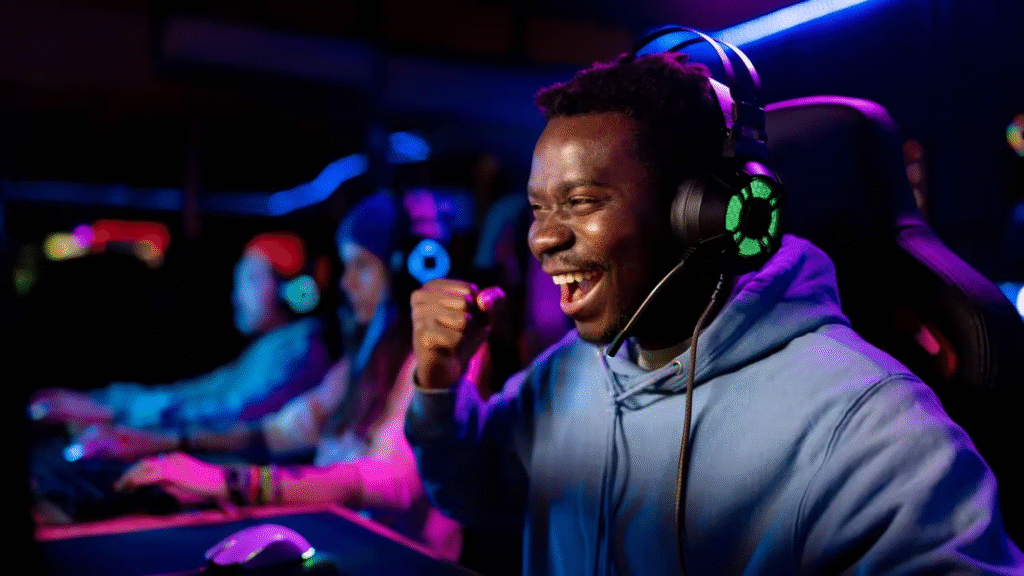
There’s something almost electric about the moment a game throws you into chaos a ticking clock, unexpected obstacles, teammates waiting for your move. In that split second, your brain shifts gears. You analyze, predict, decide, and act, often faster than you thought possible. Online games, often dismissed as simple развлечения, are in reality powerful environments that sharpen one of the most valuable life skills: problem-solving.
From the perspective of a casual player, the journey begins with curiosity. You enter a game not knowing exactly what to expect. Maybe it’s a puzzle you can’t immediately solve, an opponent who outplays you, or a mission that seems impossible at first glance. But instead of giving up, you try again. You experiment, adjust your strategy, and slowly begin to understand patterns. This process trial, error, and improvement is the foundation of problem-solving. It teaches persistence, patience, and the willingness to learn from failure.
From a cognitive standpoint, online games are like a gym for the brain. Every match demands quick thinking and rapid decision-making. Players must process multiple streams of information at once: visual cues, audio signals, team communication, and changing objectives. This constant mental engagement strengthens memory, attention, and adaptability. Over time, gamers slot gacor develop the ability to think faster without sacrificing accuracy, a skill that proves invaluable in real-world situations like exams, work deadlines, or unexpected challenges.
In competitive multiplayer environments, the complexity increases. You’re no longer solving problems alone you’re doing it as part of a team. This adds a new dimension to critical thinking. Not only must you figure out the best course of action, but you must also align your decisions with others. A strategy that works individually may fail if it doesn’t fit the team’s approach. This teaches players to think collaboratively, weigh multiple perspectives, and arrive at solutions that benefit the group as a whole.
From a strategic perspective, online games encourage forward thinking. Success often depends on anticipating what comes next rather than reacting to what’s happening now. Players learn to read patterns, predict opponents’ moves, and plan several steps ahead. In a strategy game, this might mean managing resources wisely while preparing for future conflicts. In a fast-paced shooter, it could involve predicting enemy positions based on previous encounters. These experiences sharpen analytical thinking and help players become more proactive decision-makers.
There’s also a creative side to problem-solving in gaming. Not every challenge has a single correct answer. Sometimes the best solutions come from unconventional thinking trying a new route, combining unexpected tools, or experimenting with different tactics. Games reward innovation, encouraging players to step outside their comfort zones. This mindset fosters creativity, showing that problems are not barriers but opportunities to explore new possibilities.
From a social perspective, problem-solving in online games becomes a shared experience. Teammates brainstorm strategies, adapt to changing situations, and support one another through challenges. This collaborative approach teaches negotiation, communication, and compromise. Players learn how to explain their ideas clearly, listen to feedback, and adjust their plans accordingly. In doing so, they develop not only sharper thinking skills but also stronger interpersonal abilities.
Emotions play a significant role as well. High-pressure gaming situations can be intense, pushing players to their limits. The ability to stay calm, focused, and composed in these moments is a crucial aspect of effective problem-solving. Online games provide a safe space to practice emotional regulation. Players learn to manage frustration after a loss, maintain concentration during critical moments, and bounce back quickly from mistakes. These experiences build resilience and mental toughness, qualities that are essential in both personal and professional life.
Looking at it from a real-world application perspective, the benefits of gaming become even clearer. The ability to think quickly, adapt strategies, and solve problems efficiently is highly valued in many fields. Whether it’s troubleshooting a technical issue, managing a project, or making decisions under pressure, the skills developed in slot server luar negeri online games are directly transferable. Gamers often find themselves better equipped to handle complex situations because they’ve already practiced similar scenarios in virtual environments.
Even beyond structured gameplay, online games encourage a growth mindset. Players understand that improvement takes time and effort. They analyze their mistakes, seek feedback, and continuously refine their approach. This mindset extends beyond gaming, influencing how they approach challenges in school, work, and everyday life. Instead of fearing failure, they see it as a stepping stone toward success.
From a storytelling angle, every game becomes a narrative of problem-solving. There’s a beginning, where challenges are introduced; a middle, where strategies are tested; and an end, where solutions are achieved. Players are not just participants they are active problem-solvers shaping the outcome of their own stories. This sense of agency reinforces confidence and encourages proactive thinking.
Perhaps one of the most overlooked aspects is how fun makes learning effortless. Unlike traditional methods of skill-building, online games engage players through excitement and immersion. Problem-solving doesn’t feel like a task it feels like an adventure. This intrinsic motivation keeps players coming back, practicing their skills without even realizing it. Over time, these repeated experiences build a strong foundation of critical thinking and adaptability.
In conclusion, online games are far more than a source of entertainment. They are dynamic environments that challenge players to think faster, act smarter, and solve problems creatively. Through a combination of cognitive engagement, strategic thinking, emotional regulation, and social interaction, gaming cultivates skills that are essential in today’s fast-paced world.
Every challenge in a game is an opportunity to learn, every failure a chance to improve, and every victory a testament to growth. When players immerse themselves in these experiences, they are not just playing they are training their minds to navigate complexity, embrace challenges, and find solutions in the most unexpected situations.
So the next time you pick up your controller or log into your favorite game, remember: you’re not just playing for fun. You’re sharpening your mind, building resilience, and learning to approach problems with confidence and creativity. Think faster, play smarter and watch how those skills level up your life beyond the screen.